Biorhythms. Explore your result calmly and find a way to bring its question into everyday life.
What the reading explores
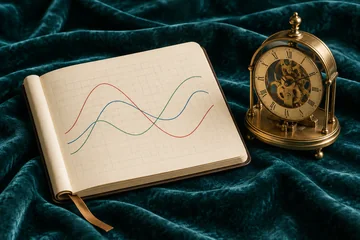
Biorhythms draw three waves calculated from birth. Physical, emotional and intellectual are names of cycles in the model, not personal measurements. Explore how their periods create alignments and crossings while distinguishing the chart from how you actually feel.
This calculator’s method
Count whole calendar days and calculate sine(2π × days / period). Chart and values use −100 to +100; bars place that value between the two extremes. The center is the selected date, with 15 days on either side.
A step-by-step example
From 28 February 2000 to 1 March, two calendar days have passed: that year included 29 February. The model gives about +52, +43 and +37 out of 100 for its 23-, 28- and 33-day cycles. These values locate points on waves, not percentages of personal ability.
Frequently Asked Questions
Does a zero crossing mean a dangerous day?
No. It means a wave is near a change of sign. A crossing within half a day counts as near, including between two consecutive dates; it is not an indicator of personal risk.
Do I need a birth time or location?
These calculators use calendar dates without birth time or location. Enter a real date between 1900 and 2100; birth cannot be in the future. For biorhythms, the selected date must be on or after birth.
Why do I get the same reading again?
Calculations and texts come from local catalogues. The same input, section and reference date produce the same result. The pauses accompany the reading but do not alter the calculation.
Can I keep the result and add notes?
Use Save reading once the result is complete. In My readings you can reopen it, add notes and download it as text. Data stays in this browser; use the library backup if you want to keep it when changing devices.