Tarot Sí o No

Consulta de 3 cartas

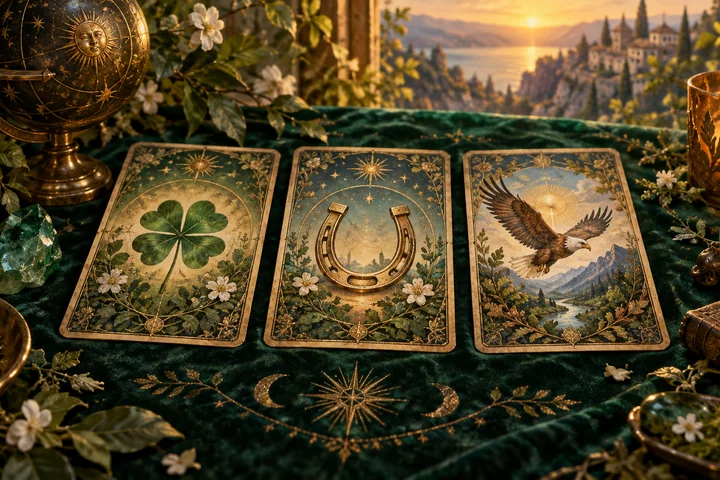
Concéntrate en tu pregunta y saca tres cartas.

Tu Respuesta

Get a clear answer to your question with the yes-or-no tarot. Three cards reveal whether the universe says yes or no.

The Yes or No Tarot is the most direct cartomancy reading: three cards for one concrete answer. No detours, no ambiguity. Ideal when you have a pending decision and need clarity. The interpretation combines each arcanum's polarity with its symbolism to give you a clear answer —yes, no or maybe— and a brief reasoning.

What is the Yes or No Tarot?

In traditional tarot reading, every arcanum is considered positive, negative or neutral based on its symbolism. The Ace of Cups, The Sun or The World are clearly affirmative cards: they speak of fulfilment, success and abundance. The Three of Swords, The Tower or the Five of Pentacles tend toward "no" or warning. Others like The Moon, The Hanged Man or the Seven of Swords are ambiguous and usually mean "wait" or "depends".

A three-card spread with these polarities allows answering with a simple system: if all three are positive, it is a resounding yes. If all three are negative, a clear no. If they are mixed, the result is nuanced —probably yes, depends, not yet— and the interpretation digs into the why.

This reading is perfect when you are torn between two options, considering an important change or need a final push to decide. It does not replace your judgement, but it can reveal trends you were not seeing.

How to Phrase Your Question

This spread works best with closed and specific questions. Unlike other readings that prefer open questions, here we want a yes or a no.

  • Good questions: "Should I accept this job offer?", "Is it a good idea to move in with my partner now?", "Should I invest in this project?"
  • Questions that need rephrasing: "What will happen with my life?" → better as "Am I on the right professional path?"
  • Avoid multiple questions: If you have several doubts, ask them separately. One spread, one question.
  • Be honest about what you expect to hear. Sometimes we ask the tarot because we already know the answer and want confirmation. That is valid —but the answer may surprise you.

How to Interpret the Result

The AI analyses the polarity combination of the three cards and returns a categorical answer along with reasoning. These are the possible responses:

  • Resounding YES (3 positive cards): the universe gives a clear green light. Move forward with confidence.
  • Probable YES (2 positive, 1 neutral): the balance tips to yes, but there is a detail to consider.
  • MAYBE / DEPENDS (mixed): neither yes nor no. The timing is unclear or external variables weigh in. Reflect and review the context.
  • Probable NO (2 negative or ambiguous): the energy does not back you up right now. Do not rule it out forever, but rethink or wait.
  • Resounding NO (3 negative): the answer is clear: it is not the path, not the moment, or the decision needs deep review.

When to Use This Reading (and When Not)

  • Use it when you have a binary decision on the table: accept or reject an offer, take a step or wait, start or end something.
  • Use it as a second opinion when you already have a clear idea and just need a final check.
  • Do not use it for existential questions ("am I happy?") — that requires a deeper reading like the Rider Waite Tarot.
  • Do not use it obsessively with the same question. If the answer does not convince you, do not repeat it: rephrase the question or try another type of reading.
  • Do not use it for decisions that depend only on you. If you need the tarot to decide whether to have a coffee, ask your intuition directly.

Frequently Asked Questions

Is the yes-or-no tarot 100% reliable?
No tarot is 100% reliable because it does not work as a deterministic oracle. The yes-or-no tarot is guidance based on current energy. Decisions always depend on you: the cards illuminate, they do not decide. If the answer resonates deeply —whether you like it or not— it is probably picking up on something real.
How does the AI decide if a card is positive or negative?
The AI uses the traditional polarity that cartomancy has established for centuries. Cards like The Sun, The World, The Star, Ace of Cups and Ten of Pentacles are universally positive. The Tower, Death (sometimes), Three of Swords and Ten of Swords tend to no. Others like The Moon or The Hanged Man are neutral. The final interpretation also considers combinations among the three cards.
Can I ask the same question multiple times?
Not recommended. If you ask the same question today and a "no" comes up again tomorrow, it does not mean you are right "this time": it means you still have not accepted the first answer. Wait at least a week before repeating a question and, if you do, reframe it from a different angle.
What if the result is "depends" or ambiguous?
A "depends" is not a bad answer: it is valuable information. It means the result depends on variables not yet defined, or your question was not well bounded. Rephrase with more precision ("Should I accept this offer under these conditions?"), or complement with a Rider Waite reading for nuance.
Is it the same as the <a href="/en/tarot/tarot-pregunta">Tarot by Question</a>?
They are different. The Yes or No Tarot gives a direct answer: yes, no or depends. The Tarot by Question gives a full reading on your question without reducing it to a yes/no. If you want quick clarity, use yes-or-no. If you want to understand the nuance and context, use tarot by question.
Why does it sometimes say the opposite of what I expected?
Because your wish and reality do not always agree. The tarot does not tell you what you want to hear but what you need to see. If the result contradicts your expectations, it is worth pausing: is there something you are not considering? Are you being objective? Unexpected answers are the most useful for growth.